.png) Book Now
Book Now  720-464-4804
  Find A Location
 Rediscover the joy of a complete smile with our dental bridges. Whether you're considering traditional or implant-supported options, our solutions can seamlessly fill gaps left by missing teeth.

Missing teeth can impact your appearance and self-esteem while also hindering the function of your smile.
At The Dental Team in Brighton, CO, we offer tailored dental bridges to fill the gaps caused by missing teeth, enhancing both function and appearance. A dental bridge serves as a lasting solution that uses supporting teeth or implants to anchor a false tooth (pontic) securely. Whether you're missing just one tooth or several, choosing a dental bridge can avert bone loss, prevent the shifting of remaining teeth, and other potential oral complications.
If you're considering options such as dental bridges versus partial dentures or implants, our experienced team will assist you in determining the most appropriate bridge type for your needs.
For our patients in Brighton dental bridges offer a durable option to address gaps from missing teeth. They consist of an artificial tooth anchored by surrounding abutment teeth, which may be natural or dental implants.
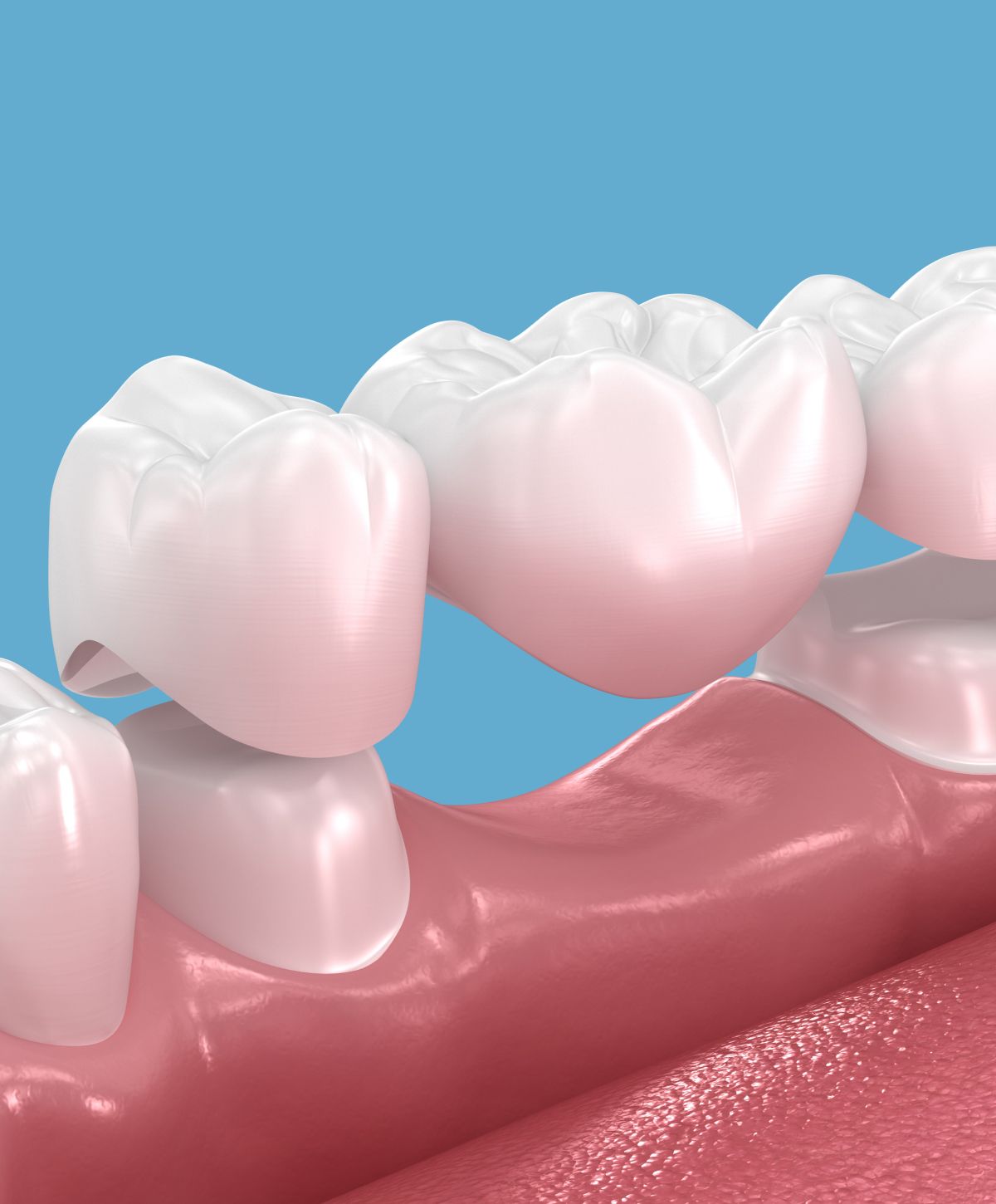

Different types of dental bridges can be found, each designed for particular needs:
This popular bridge type uses crowns on adjacent teeth to hold the artificial tooth securely in place.
Best suited when only one natural tooth is next to the gap. It's often recommended for areas with lower bite pressure, such as front teeth.
This option utilizes metal wings or a resin-bonded framework to attach to neighboring teeth without using crowns, offering a less invasive approach.
An exceptionally robust option, supported by either one implant or two implant-supported crowns instead of natural teeth. This solution is ideal for replacing several missing teeth and helps prevent bone loss.
Each type of dental bridge provides distinct benefits tailored to your specific dental requirements. Our Brighton dental experts are here to help you choose the most suitable option for your needs.
When getting a dental bridge Brighton patients will typically have two in-office appointments:
First Visit: Preparing Teeth and Taking Impressions
Second Visit: Fitting and Securing the Bridge
If you choose implant-supported bridges, anticipate a lengthier timeline involving two surgeries to insert implants before connecting the restoration.


A dental bridge could be the suitable treatment if you:
If there is significant bone loss or weak adjacent teeth, an implant-supported bridge might provide better long-term stability. Your dentist will thoroughly assess your situation to suggest the best treatment for you.
Based on your specific requirements, missing teeth can be replaced with a dental bridge, a dental implant, or both (implant-supported bridge). In your consultation, we'll discuss the benefits of each to guide you toward an informed choice.
An excellent choice for those seeking a fast and cost-effective solution without surgery. Ideal for replacing one or two missing teeth when surrounding teeth are strong enough to hold the bridge.
Perfect for individuals wanting a durable and lasting option that doesn't impact adjacent teeth. A dental implant helps prevent bone deterioration and provides a stable base for chewing.
Most patients adapt to their new dental bridge within a week. With proper care, a bridge can last 10-15 years or longer. It's crucial to follow certain steps for smooth healing and enduring results.
What to Expect After Receiving a Dental Bridge
Caring for Your Dental Bridge
To maintain your dental bridge, natural teeth, and gums in excellent condition, it's essential to uphold good oral hygiene:
After your dental bridge is fitted, you'll experience a significant improvement in both your smile and chewing ability. With traditional or cantilever bridges, the permanent restoration is attached during the subsequent visit. Implant-supported bridges may take several months because the implants need time to heal and integrate with the bone.

With excellent oral hygiene and regular dental visits, your bridge will remain a natural-looking, efficient, and long-lasting solution for missing teeth.
With the appropriate support from abutment teeth or implants, a dental bridge can replace up to four missing teeth in a row. Traditional versions typically cover one or two teeth, while implant-supported bridges can handle more without needing nearby natural teeth.
Many dental insurance plans offer partial coverage for the cost of a dental bridge if it's deemed necessary for functional chewing and oral health. Coverage varies by provider, so it's best to check with your insurer or visit our office near Brighton for specific costs and payment details.
The procedure is usually associated with minimal discomfort because the abutment teeth are numbed first. Any minor sensitivity afterward is often manageable with over-the-counter pain relief. Implant-supported bridges might require more recovery time due to surgical healing, but most patients return to normal activities within days.
Dental bridges typically last 10-15 years with proper care. Maintaining good oral hygiene, attending regular checkups, and avoiding excessive pressure like chewing ice can help extend your bridge's lifespan.
Addressing gum disease is essential before getting a dental bridge because healthy gums and surrounding structures are crucial for supporting it. Untreated gum disease could weaken abutment teeth, risking bridge failure. Routine dentist visits are key for maintaining oral health long-term.
A fixed restoration such as a dental bridge is permanently attached to natural teeth or implants, while partial dentures are removable false teeth taken out for cleaning. Bridges generally offer better stability, comfort, and function compared to partial dentures.
Minor damage like small chips in porcelain-fused-to-metal materials may be repairable. However, major issues such as large cracks or looseness often require replacement. Regular checkups can identify wear early before extensive repairs become necessary.
Typically, patients can receive a dental bridge about 6 to 8 weeks after tooth extraction once gum tissue has healed and swelling has subsided. The exact timing depends on individual healing progress and any additional treatments like bone grafting that may be needed. Your dentist will monitor your recovery to decide the optimal time to proceed.