.png) Book Now
Book Now  720-464-4804
  Find A Location
 Custom dental bridges to restore your smile and function.

Missing teeth affect more than just your appearance; they can also impact your ability to chew, speak clearly, and maintain good oral health.
At The Dental Team near Cherry Creek, CO, we design personalized dental bridges to restore both the functionality and appearance of your smile. A bridge spans the gap left by missing teeth and is anchored by adjacent teeth (known as abutments) or dental implants. Whether you're missing one tooth or several, a bridge can help prevent shifting of your other teeth and lower the risk of bone loss.
Unsure if a bridge, partial denture, or implant suits you best? Our team will guide you through your choices and suggest the most suitable option for your objectives and lifestyle.
Rediscover your smile in Cherry Creek with dental bridges, a trusted solution for replacing missing teeth. By using an artificial tooth supported by nearby abutment teeth (natural or implant-based), this method not only restores your smile but also supports your facial structure and prevents other teeth from shifting.
Enjoy a balanced, confident smile that enhances both appearance and oral health.
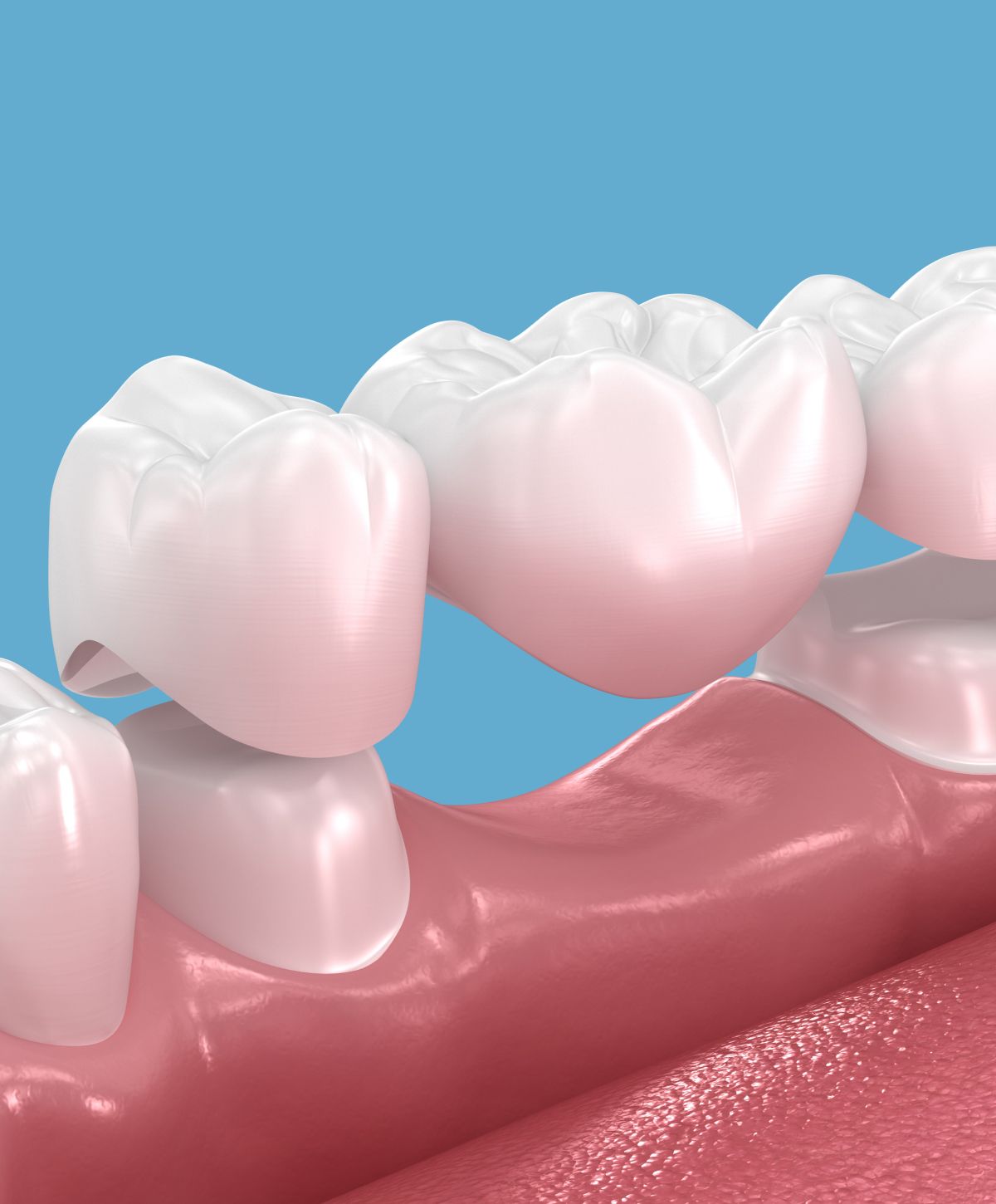

Dental bridges are designed for your unique dental needs.
A standard dental bridge uses crowns on adjacent teeth to securely anchor an artificial tooth. This method relies on your natural teeth for support, offering a dependable way to replace missing teeth.
It ensures that your smile stays functional and attractive, blending seamlessly with your existing teeth.
A cantilever bridge is a smart choice when there's just one natural tooth next to a gap, ideal for areas with less bite pressure like front teeth. This approach not only restores your smile but also maintains the health of the surrounding tooth. By anchoring the bridge to a single tooth, it offers a seamless appearance and function, ensuring that your dental health remains intact while enhancing aesthetics.
This bridge uses metal wings or a resin-bonded framework, eliminating the need for crowns while connecting to adjacent teeth. It's perfect for those who value tooth preservation, offering durability and aesthetics with minimal dental intervention.
Implant-supported crowns offer a robust option for those missing multiple teeth. Anchored by one or two implants, they provide stability and function independently of natural teeth.
Beyond restoring your smile, this method helps prevent bone loss and preserves facial structure long-term, making it a comprehensive solution for oral health.
Every dental bridge offers unique advantages, tailored to meet your specific oral health needs. If you're aiming to restore function or enhance your smile, our skilled team near Cherry Creek is here to guide you. We'll provide personalized recommendations, considering factors like durability, appearance, and comfort.
The process usually requires two visits to our office:
Visit 1: Preparing the Teeth & Taking Impressions To begin, the abutment teeth—those that will support your bridge—are carefully reshaped to accommodate crowns. We then take detailed impressions to design a custom bridge that fits comfortably and looks natural. A temporary bridge is placed to protect the area while your permanent one is being crafted.
Visit 2: Fitting & Placing the Bridge
At your next visit, the temporary bridge is removed and your new permanent bridge is tested for fit, bite, and comfort. Any necessary adjustments are made before the bridge is securely bonded in place, ensuring a natural feel and smooth function when chewing or speaking.
For Implant-Supported Bridges
Implant-supported bridges require a longer process, involving two surgical phases: implant placement followed by a healing period before attaching the final bridge.

A dental bridge may be a great option if you:
If there is significant bone loss or the surrounding teeth aren’t strong enough, an implant-supported bridge may provide a more durable, long-term solution. Your dentist will evaluate your needs and recommend the best treatment for your oral health and lifestyle.
Enhancing your smile and oral health is achievable with options like dental bridges, implants, or implant-supported bridges. Each offers distinct advantages tailored to your needs.
During a consultation near Cherry Creek, we'll explore these choices, ensuring you find the perfect solution. Our goal is to provide confidence in your decision, resulting in a beautiful and fully functional smile.
This non-surgical option provides a quick and budget-friendly solution to replace one or two missing teeth. When neighboring teeth can securely support the bridge, it becomes an ideal choice for those seeking a reliable fix without surgery. This method not only restores your smile but also maintains oral functionality seamlessly.
Dental implants offer a strong, lasting solution for tooth replacement. Unlike other options, they don't impact surrounding teeth and help prevent bone loss by mimicking natural tooth roots. This creates a stable foundation for chewing, boosting comfort and function. Perfect for those seeking durability and better oral health, dental implants blend seamlessly with existing teeth, providing both aesthetic charm and practical advantages.
Most people adapt to their dental bridge within a week. With proper care, your bridge can last 10–15 years—or even longer. Establishing good habits is crucial for promoting healing and maintaining long-term health.
What to Expect After Placement
Caring for Your Dental Bridge
To keep your bridge, gums, and surrounding teeth healthy, daily care is essential:
After your dental bridge is placed, expect noticeable improvements in both your smile and chewing function. While traditional or cantilever bridges are usually secured in a follow-up appointment, implant-supported bridges might take longer due to necessary healing and bone integration. Enjoy the benefits of a revitalized, confident smile!

A seamless addition to your smile, the replacement tooth in a dental bridge enhances both aesthetics and functionality. This solution ensures comfortable chewing and speaking, eliminating inconvenience. By maintaining stability, the bridge prevents neighboring teeth from moving or causing bite alignment issues. With dedicated oral care and routine dental check-ups, your bridge remains a natural-looking, efficient, and enduring answer for missing teeth.
A dental bridge is an effective way to replace missing teeth, restoring both smiles and function. Traditional bridges anchor onto neighboring teeth, typically covering one or two gaps.
Most dental insurance plans offer partial coverage for dental bridges when needed for chewing and oral health. Coverage can differ by provider, so it's wise to check with your insurer. For specific costs and payment options, feel free to visit our Broomfield office.
The procedure usually involves minimal discomfort, as the abutment teeth are numbed beforehand. Any slight sensitivity afterward can typically be managed with over-the-counter pain relievers. For implant-supported bridges, recovery may take longer due to surgical healing, but most patients return to normal activities within a few days.
Dental bridges are a reliable solution that can last 10-15 years with proper care. To extend their lifespan, focus on maintaining good oral hygiene, attend regular checkups, and avoid excessive force like chewing ice. By prioritizing these habits, you ensure your dental bridge continues to serve you well for many years.
Healthy gums are the foundation for a successful dental bridge. Before getting a bridge, addressing any gum disease is vital. Untreated gum issues can weaken the support teeth, jeopardizing the bridge's stability. Regular dentist visits help maintain optimal oral health, ensuring your dental treatments last long and serve you well. Remember, strong gums lead to strong bridges!
A fixed restoration like a dental bridge is anchored to natural teeth or implants, providing superior stability, comfort, and functionality. Unlike removable partial dentures, bridges stay in place permanently, facilitating smoother eating and speaking while promoting oral health. Although partial dentures are easy to clean due to their removability, they may lack the same level of stability and comfort that bridges offer.
Porcelain-fused-to-metal restorations can endure minor repairs, like small chips. However, significant cracks or looseness usually require replacement. Regular checkups are essential, as they catch early signs of wear, potentially avoiding extensive fixes. By monitoring these issues closely, you can save both time and resources over the long term.
After a tooth extraction, most patients can expect to wait about 6 to 8 weeks before getting a dental bridge. This period allows for the gum tissue to heal and any swelling to reduce. However, healing times can differ based on individual factors and additional procedures like bone grafting. Your dentist will keep a close eye on your recovery and determine when it's best to proceed with the next step.