.png) Book Now
Book Now  720-464-4804
  Find A Location
 Restore your smile with dental bridges in Denver. We offer traditional and implant-supported bridges for missing teeth. Book your consultation today!

Missing teeth can do more than alter your looks—they may influence how you chew, speak, and your overall oral health.
At The Dental Team in Longmont, we provide tailored dental bridges to close the spaces left by missing teeth, bringing back both function and appearance. A dental bridge serves as a stable restoration that relies on abutment teeth or implants to hold an artificial tooth (pontic). Whether you're missing a single tooth or multiple ones, a dental bridge can help avert bone deterioration, movement of existing teeth, and additional oral issues.
If you're weighing options between a dental bridge vs. partial dentures or implants, our skilled team will assist you in selecting the optimal bridge type for your situation.
A dental bridge serves as a lasting solution to fill the space left by missing teeth. It involves an artificial tooth supported by abutment teeth, which can be natural teeth or dental implants, situated on either side of the gap.
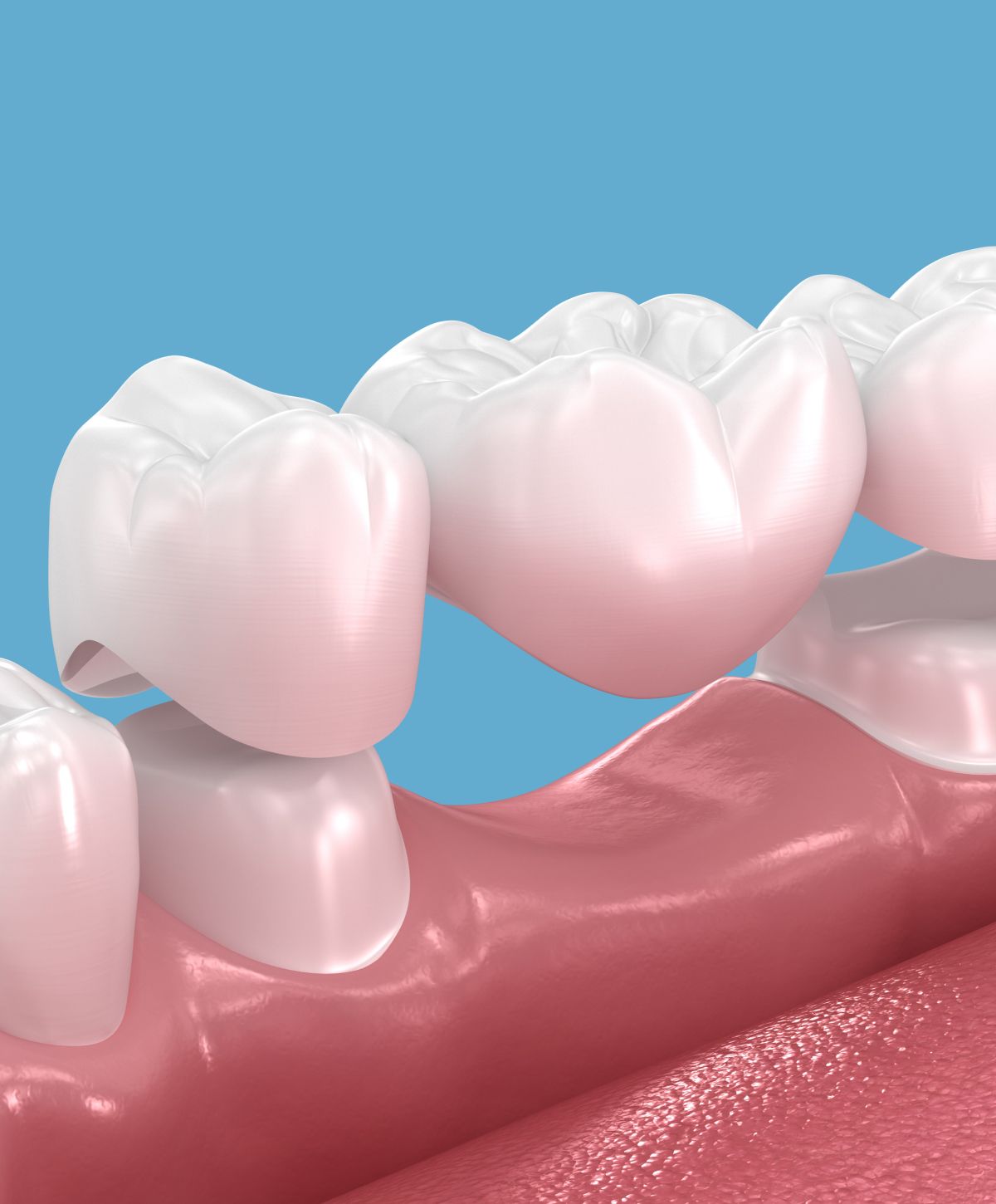

Various types of dental bridges are available, each ideal for specific scenarios:
This is the most prevalent type, utilizing dental crowns on nearby teeth to secure the false tooth.
This option is chosen when there's only a single natural tooth adjacent to the gap. Typically suggested for areas with minimal chewing force, like the front teeth.
This bridge employs metal wings or a resin-bonded framework, connecting to the adjacent teeth. It's a more conservative approach.
The strongest and most enduring choice, anchored by either an implant or two implant-supported crowns rather than natural teeth. It's optimal for addressing several missing teeth, aiding in preventing bone deterioration.
Each bridge type offers unique advantages based on your dental requirements, and our team in Longmont, CO will assist you in selecting the ideal solution.
The dental bridge procedure typically requires two office visits:
First Visit: Preparing the Teeth & Taking Impressions
Second Visit: Fitting & Placing the Bridge
For implant-supported bridges, the process may take longer, as it requires two surgeries to place the implants before attaching the final restoration.


A dental bridge might be suitable if you:
If there's substantial bone loss or weak neighboring teeth, an implant-supported bridge may offer better long-term stability.
During your consultation, our team will go over the advantages and disadvantages of each choice.
An excellent choice for those seeking a quick, budget-friendly option without surgery. Perfect for replacing one or two missing teeth when adjacent teeth are robust enough to support the bridge.
Ideal for individuals looking for a long-lasting, sturdy solution with no effect on adjacent teeth. It helps in preventing bone deterioration and offers a more stable base for chewing.
Most individuals get used to their new dental bridge within a week. With the right care, it can remain effective for 10-15 years or longer. However, there are several crucial steps to follow for a comfortable healing experience and enduring results.
What to Anticipate After Receiving a Dental Bridge
Maintaining Your Dental Bridge
To keep your dental bridge and oral health in optimal condition, adhere to these guidelines:
Once your dental bridge is placed, you'll see a noticeable enhancement in both your smile and chewing ability. For those opting for a traditional or cantilever bridge, the final restoration is secured by your second visit. In the case of implant-supported bridges, achieving results might take several months as the implants heal and integrate with the bone.

By keeping up with oral hygiene and visiting your dentist regularly, your bridge will continue to offer a natural, effective, and durable solution for lost teeth.
In Longmont, CO, a dental bridge can replace one to four missing teeth consecutively. The replacement depends on the type of bridge and the strength of the supporting abutment teeth or implants. Traditional bridges usually replace one or two teeth, while implant-supported bridges have the capacity to replace more without needing natural teeth for support.
Many insurance plans cover part of the dental bridge cost, especially if it's necessary for proper chewing function and oral health. Coverage is provider-specific; therefore, it is advisable to check with your insurer or visit our local office for detailed costs and payment options.
Most patients in Longmont experience minimal discomfort during this procedure. Abutment teeth are numbed beforehand, and any minor sensitivity post-procedure can be eased with over-the-counter painkillers. For implant-supported bridges, recovery might take longer due to surgical healing time; however, most people resume normal activities within days.
With proper care in Longmont, most dental bridges last 10-15 years. Maintaining good oral hygiene, attending regular checkups, and avoiding excessive forces like chewing ice can enhance your bridge's longevity.
Treating gum disease is essential before getting a dental bridge in Longmont. Healthy gums and teeth are crucial for supporting fixed bridges. Untreated gum disease could weaken abutment teeth causing bridge failure. Regular visits to your dentist help maintain oral hygiene and ensure success over time.
A dental bridge is a permanent restoration attached to natural teeth or implants; whereas partial dentures are removable false teeth that require removal for cleaning. Bridges offer better stability, comfort, and functionality compared to partial dentures—a preferred option among many patients in Longmont.
If damage occurs to your dental bridge in Longmont—such as minor chipping—it may be repairable. However significant cracks or looseness often necessitate replacement instead of repair. Routine checkups help identify wear before major issues arise.
Patients typically wait weeks to months post-extraction for gums/bone healing before receiving their new bridges here in Longmont. Implant-supported options might need additional healing time prior placement but rest assured that dentists will assess progress recommending ideal treatment timelines accordingly.