.png) Book Now
Book Now  720-464-4804
  Find A Location
 Bring back your confident smile with dental bridges. We provide both traditional and implant-supported options to replace missing teeth. Schedule your consultation today!

Missing teeth affect more than just your smile. They can also impact your confidence, make it harder to chew or speak, and put your oral health at risk.
At The Dental Team in Loveland, CO, we create custom dental bridges to fill the gaps left by missing teeth, restoring both the look and function of your smile. A bridge is a fixed restoration that uses neighboring teeth or dental implants to anchor a replacement tooth (pontic) securely in place. Whether you’re missing one tooth or several, a dental bridge can help prevent bone loss, stop neighboring teeth from shifting, and reduce the risk of future dental problems.
If you’re deciding between a bridge, partial dentures, or dental implants, our experienced team will walk you through your options and help you choose the solution that best fits your needs.
A dental bridge is a long-term solution for replacing one or more missing teeth. It consists of an artificial tooth secured by neighboring abutment teeth, which may be natural teeth or dental implants.
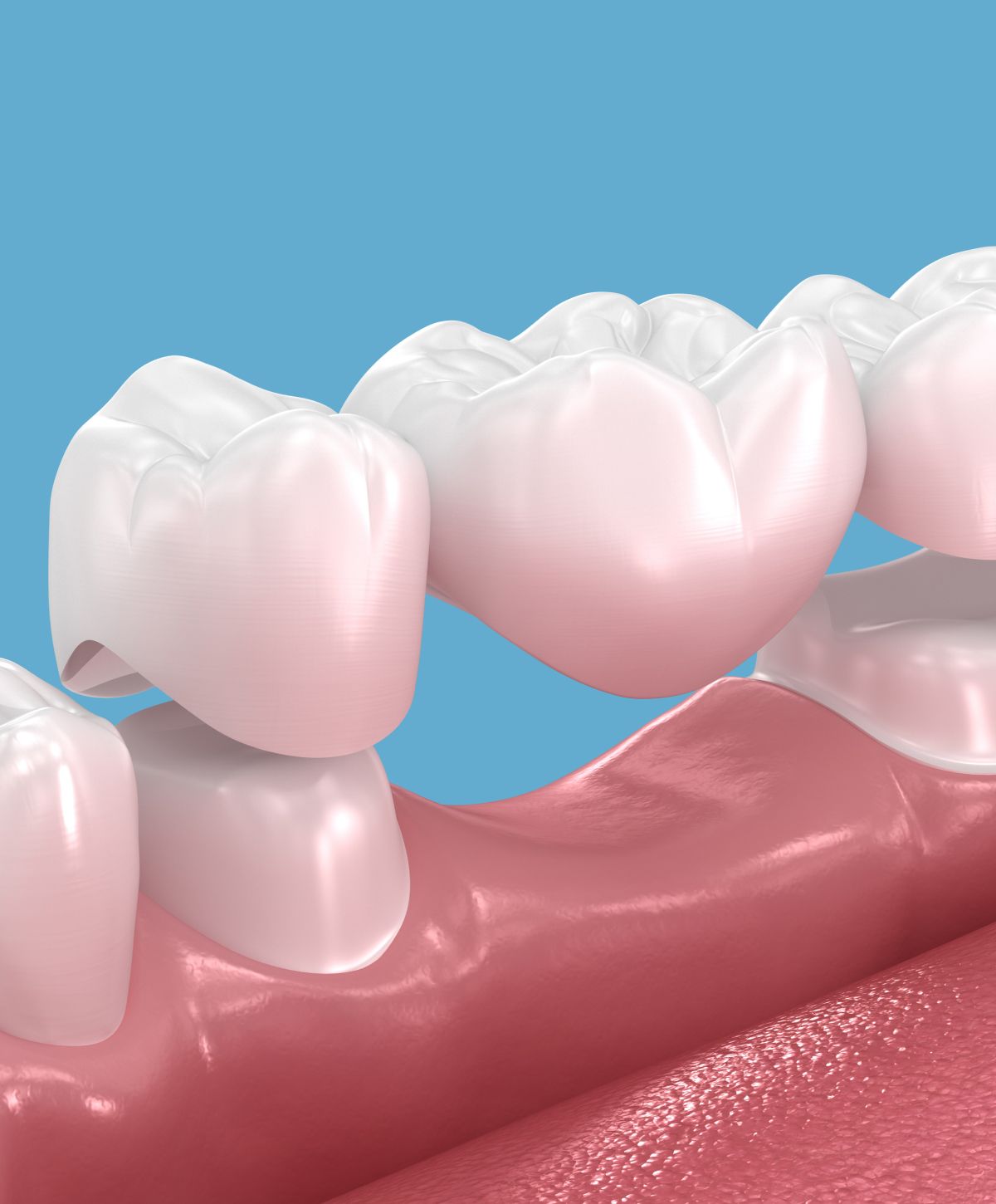

There are several types of dental bridges, each designed to meet different needs:
The most common style, this bridge uses dental crowns placed on the teeth next to the gap to hold the replacement tooth securely in place.
Used when only one natural tooth is next to the space, this option is typically recommended for areas with lighter biting pressure, such as the front teeth.
A conservative choice that avoids dental crowns, this bridge attaches to adjacent teeth using a metal or resin-bonded framework with small “wings,” making it a minimally invasive option.
Anchored by one or more dental implants instead of natural teeth, this option offers exceptional stability and longevity. Ideal for replacing multiple teeth, it also helps preserve jawbone health by preventing bone loss.
Every bridge type comes with its own benefits, depending on your specific dental needs. Our team in Loveland, CO, will work with you to determine the option that’s the best fit for your smile.
The dental bridge procedure usually involves two visits to the dentist's office:
Getting a dental bridge typically takes place over two appointments:
First Visit – Tooth Preparation & Impressions The supporting teeth (abutment teeth) are carefully reshaped to accommodate dental crowns. Impressions are then taken to create a bridge that fits precisely and looks natural. While your permanent bridge is being crafted, a temporary bridge may be placed to protect your prepared teeth.
Second Visit – Fitting & Placement Your temporary bridge is removed, and the custom-made permanent bridge is positioned. The dentist checks the fit, bite, and overall comfort before securely bonding it in place. Final adjustments are made to ensure a seamless look and smooth function.
For implant-supported bridges, the process involves additional steps, including two surgical procedures to place the implants, followed by attaching the final restoration once healing is complete.


A dental bridge may be an ideal option if you:
If nearby teeth are weak or there is significant bone loss, an implant-supported bridge may provide greater long-term stability. Your dentist will perform a thorough evaluation to determine the best treatment for your needs.
Based on your unique situation, missing teeth can be replaced with a traditional dental bridge, a dental implant, or an implant-supported bridge that combines both methods. During your consultation, we’ll explain the benefits of each choice so you can select the option that works best for you.
A great choice for patients who want a faster, more affordable solution without surgery. Best suited for replacing one or two missing teeth when the surrounding teeth are healthy and strong enough to provide support.
A durable, long-term solution that leaves neighboring teeth untouched. Because the implants act as artificial tooth roots, they help maintain bone density while offering a secure and reliable base for chewing and speaking.
A permanent, standalone tooth replacement that mimics the look, feel, and function of natural teeth. Implants are anchored directly into the jawbone, helping prevent bone loss while providing exceptional stability for chewing and speaking.
Most people adjust to their new dental bridge within a week, and with proper care, it can last 10–15 years or even longer. Following the right aftercare steps ensures both a smooth recovery and long-term success.
What to Expect After Getting a Dental Bridge
Caring for Your Dental Bridge
To keep your bridge, surrounding teeth, and gums in excellent condition:
After your dental bridge is placed, you’ll quickly notice improvements in both the appearance of your smile and your ability to chew comfortably. With traditional or cantilever bridges, the final restoration is secured during the second appointment. For implant-supported bridges, the process takes longer, typically a few months, to allow the implants to fully heal and integrate with the jawbone before the bridge is attached.

Your new tooth will blend naturally with the rest of your smile, improving both its look and function. With your bridge in place, you’ll be able to eat and speak with ease and comfort. A fixed bridge also helps keep neighboring teeth securely in position, protecting your bite from shifting or becoming misaligned. By maintaining good oral hygiene and scheduling regular dental checkups, your bridge can remain a long-lasting, attractive, and dependable solution for replacing missing teeth.
The number of teeth a bridge can replace depends on the type of bridge and the strength of its supporting abutment teeth or implants. In most cases, traditional bridges replace one or two consecutive teeth, while implant-supported bridges can restore up to four in a row without relying solely on natural teeth for support.
Many dental insurance plans will partially cover a bridge if it’s deemed medically necessary for chewing or maintaining oral health. Coverage varies, so it’s best to check with your provider or visit our Loveland office for a personalized cost and benefits review.
Getting a bridge is generally comfortable, as the surrounding teeth are numbed before treatment. Mild sensitivity afterward is common and usually relieved with over-the-counter pain medication. For implant-supported bridges, healing may take longer due to the surgical process, but most patients return to normal activities quickly.
With proper care, dental bridges typically last 10–15 years or more. Daily brushing and flossing, routine checkups, and avoiding habits like chewing ice can help maximize their lifespan.
Healthy gums are essential for supporting a dental bridge, so any gum disease must be treated first. Without healthy supporting structures, the bridge’s stability may be compromised. Regular dental visits can help keep your gums and teeth in good condition.
A dental bridge is a permanent restoration fixed to natural teeth or implants, while partial dentures are removable appliances taken out for cleaning. Bridges tend to feel more stable, comfortable, and natural than removable dentures.
Minor chips or small issues can sometimes be repaired, especially with porcelain-fused-to-metal bridges. More significant damage, like large cracks or loosening, often requires replacement. Regular dental exams can catch early signs of wear before major repairs are needed.
Most people can receive a bridge 6–8 weeks after an extraction, once the gums have healed and swelling has subsided. The exact timing may vary if additional procedures, such as bone grafting, are required. Your dentist will determine the ideal time for placement based on your healing progress.