.png) Book Now
Book Now  720-464-4804
  Find A Location
 Restore your smile with dental bridges. We offer traditional and implant-supported bridges for missing teeth. Book your consultation today!
Available At

Missing teeth can affect more than just your appearance—they can impact your chewing function, speech, and overall oral health.
At The Dental Team, we offer custom dental bridges to fill the gap created by missing teeth, restoring both function and aesthetics. A dental bridge is a fixed restoration that uses abutment teeth or dental implants to support an artificial tooth (pontic). Whether you're missing one tooth or several, a dental bridge can help prevent bone loss, shifting of remaining teeth, and further dental complications.
If you're considering a dental bridge vs. partial dentures or dental implants, our expert team will help determine the best type of bridge for your needs.
A dental bridge is a permanent restoration designed to replace one or more missing teeth. It consists of an artificial tooth that is anchored by abutment teeth (natural teeth or dental implants) on either side of the gap caused by missing teeth.
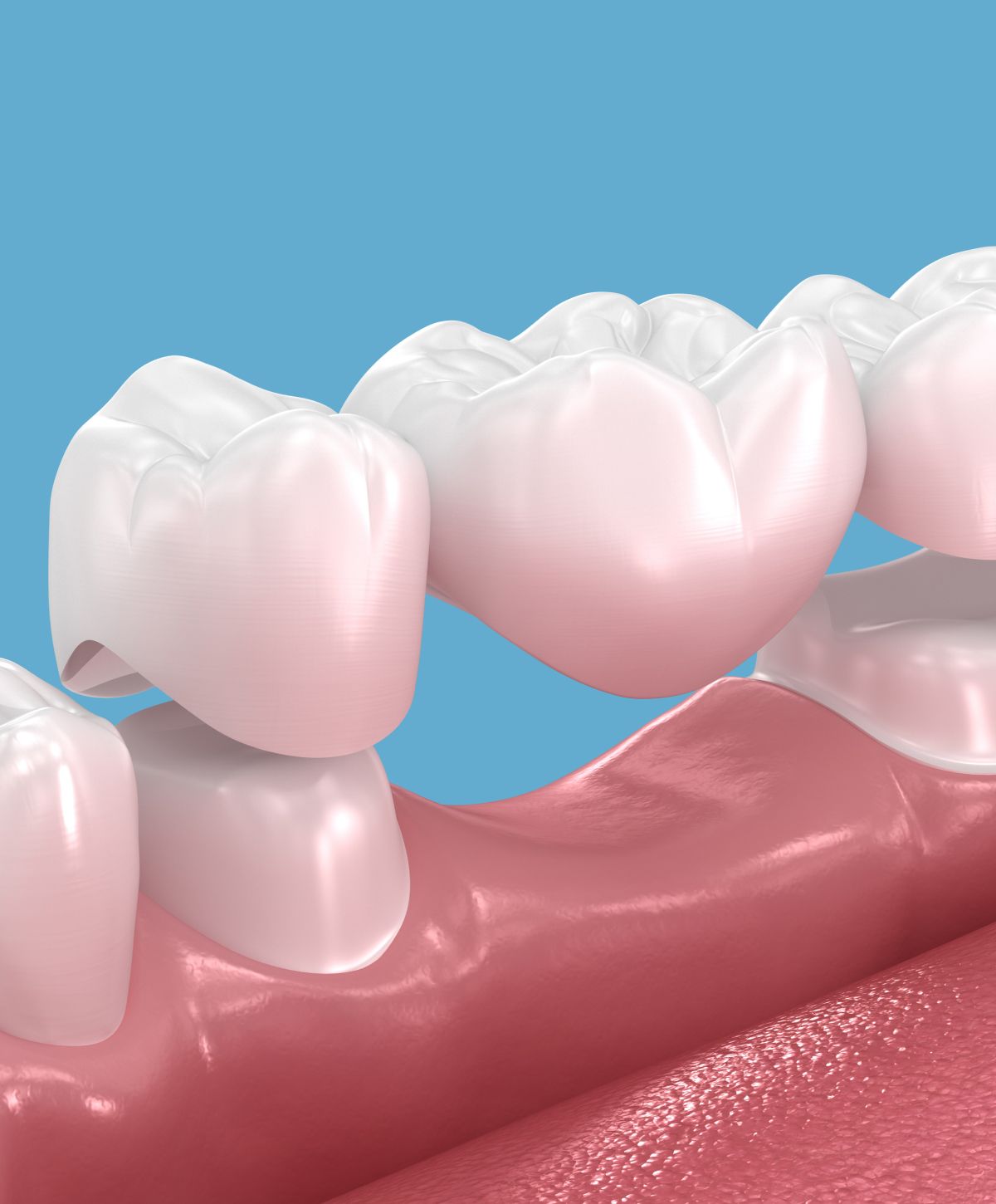

There are several types of dental bridges, each suited for different cases:
The most common type, using dental crowns on adjacent teeth to hold the artificial tooth in place.
Used when there is only one natural tooth next to the gap. These are typically recommended for areas with less chewing pressure, such as front teeth.
Uses metal wings or a resin-bonded framework instead of crowns to attach to the neighboring teeth, making it a less invasive option.
The most durable and long-lasting option, supported by one implant or two implant-supported crowns instead of natural teeth. These are ideal for multiple missing teeth and help prevent bone loss.
Each type of bridge has its benefits depending on your specific dental needs, and our team will help you choose the best option.
The dental bridge procedure typically requires two office visits:
First Visit: Preparing the Teeth & Taking Impressions
Second Visit: Fitting & Placing the Bridge
For implant-supported bridges, the process may take longer, as it requires two surgeries to place the implants before attaching the final restoration.


A dental bridge may be the right choice if you:
If you have significant bone loss or weak neighboring teeth, an implant-supported bridge may be a better option for long-term stability.
Our team will discuss the pros and cons of each option during your consultation.
Best for patients who want a faster, cost-effective solution without surgery. Ideal for replacing one or two missing teeth when neighboring teeth are strong enough to support the bridge.
Best for those seeking a long-term, durable solution with no impact on surrounding teeth. Helps prevent bone loss and provides a stronger foundation for chewing.
Most patients adjust to their new dental bridge within a week, and with proper care, it can last 10-15 years or longer. However, there are a few important steps to follow to ensure a comfortable healing process and long-lasting results.
What to Expect After Getting a Dental Bridge
Caring for Your Dental Bridge
To maintain your dental bridge and oral health, follow these tips:
You will notice an immediate improvement in your smile and chewing function as soon as your dental bridge is placed. If you receive a traditional or cantilever bridge, the final restoration is secured during your second appointment. For implant-supported bridges, results may take a few months while the implants heal and integrate with the bone.

By maintaining good oral hygiene and seeing your dentist regularly, your bridge will continue to provide a natural, functional, and long-lasting solution for missing teeth.
A dental bridge can replace one to four missing teeth in a row, depending on the type of bridge and the strength of the abutment teeth or dental implants supporting it. Traditional bridges typically replace one to two teeth, while implant-supported bridges can replace more teeth without relying on natural teeth for support.
Many dental insurance plans cover a portion of the cost of a dental bridge, especially if it is deemed necessary for chewing function and oral health. Coverage varies by provider, so it’s best to check with your insurance company or visit our office for a breakdown of costs and available payment options.
Most patients experience little to no discomfort during the procedure. The abutment teeth are numbed before preparation, and any minor sensitivity afterward can be managed with over-the-counter pain relief. Patients who choose implant-supported bridges may have a slightly longer recovery due to surgical healing time, but most return to normal activities within a few days.
With proper care, most dental bridges last between 10-15 years. Good oral hygiene, regular dental checkups, and avoiding excessive force (such as chewing on ice or hard foods) can help extend the lifespan of your bridge.
If you have gum disease, it must be treated before getting a dental bridge. Healthy gums and surrounding teeth are essential for supporting a fixed bridge. If left untreated, gum disease can weaken the abutment teeth and cause the bridge to fail. Regular visits to your dentist and dental hygienist will help maintain good oral hygiene and ensure long-term success.
A dental bridge is a fixed restoration that is permanently attached to natural teeth or implants, while partial dentures are removable false teeth that you take out for cleaning. Bridges provide better stability, comfort, and function compared to partial dentures, making them a preferred option for many patients.
In some cases, a dental bridge can be repaired if minor damage occurs, such as a small chip in the porcelain-fused-to-metal material. However, if the bridge is significantly cracked, loose, or worn down, replacement may be necessary. Regular checkups help catch wear and tear before major repairs are needed.
Most patients need to wait a few weeks to a few months after a tooth extraction to allow the gums and bone to heal before getting a dental bridge. If an implant-supported bridge is planned, additional healing time may be required before placing the implant-supported crowns. Your dentist will evaluate your healing progress and recommend the best timeline for your treatment.