.png) Book Now
Book Now  720-464-4804
  Find A Location
 Restore your smile with dental bridges in Thornton, CO. We offer traditional and implant-supported bridges for missing teeth.

Missing teeth affect not just your appearance and confidence but also your ability to chew, speak clearly, and maintain good oral health.
At The Dental Team in Thornton, CO, we offer custom dental bridges to fill the gaps left by missing teeth, restoring both function and appearance. A bridge is a long-lasting solution that uses nearby teeth or dental implants to support a false tooth (pontic). Whether you are missing one tooth or several, a bridge can help prevent shifting of surrounding teeth, bone loss, and other oral health concerns.
If you are considering options such as bridges, partial dentures, or implants, our experienced team will walk you through each choice and recommend the solution that best fits your needs.
A dental bridge serves as a lasting solution to fill the gap left by one or more missing teeth. This involves an artificial tooth held in place by adjacent abutment teeth, which can be natural teeth or dental implants.
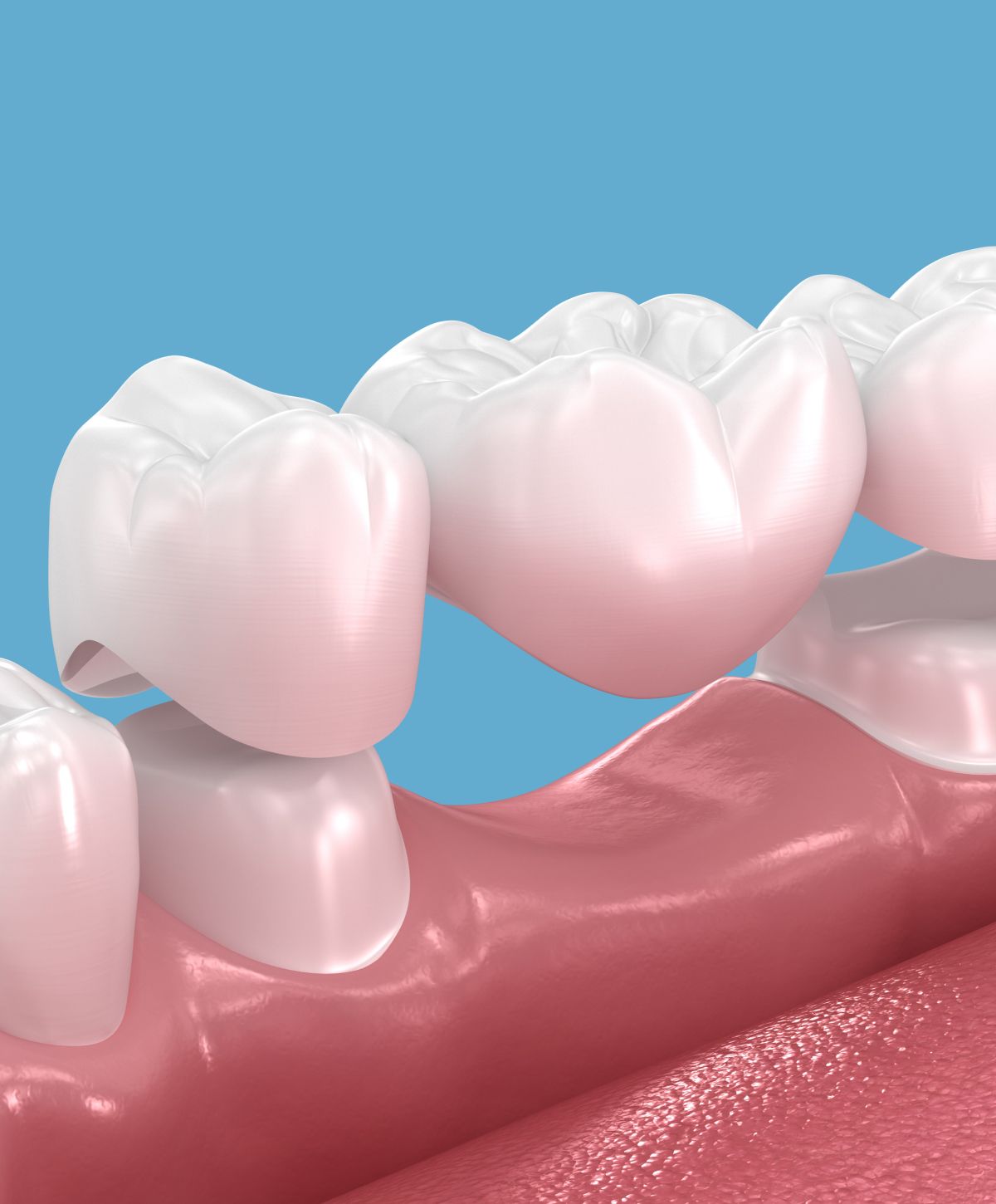

Various types of dental bridges are available, each tailored for specific situations:
This is the most common type of bridge and uses dental crowns on nearby teeth to secure the prosthetic tooth.
Ideal when there's just one natural tooth adjacent to the gap. Often advised for locations with minimal biting force, like the front teeth.
This bridge employs metal wings or a resin-bonded framework, avoiding crowns, to connect with the adjacent teeth, offering a minimally invasive solution.
A highly durable choice, anchored by either a single implant or a pair of implant-supported crowns rather than natural teeth. These are perfect for addressing multiple missing teeth, while also preventing bone deterioration.
Each type of bridge offers unique advantages based on your individual dental needs. Our Thornton, CO, team will assist you in selecting the best choice for you.
The dental bridge procedure usually involves two visits to the dentist's office:
Initial Visit: Teeth Preparation & Impressions
Follow-Up Visit: Bridge Fitting & Placement
If opting for implant-supported bridges, expect a longer process with two surgeries to place the implants before attaching the restoration.


A dental bridge might be the right treatment if you:
If you have considerable bone loss or weak adjacent teeth, an implant-supported bridge could offer better long-term stability. Your dentist will carefully evaluate your case to recommend the right treatment for you.
Depending on your individual needs, missing teeth may be replaced using a dental bridge, a dental implant, or a combination of both (implant-supported bridge). During your consultation, we will review the advantages of each option to help you make an informed decision.
Suitable for individuals looking for a quick, budget-friendly option that doesn't require surgery. Perfect for replacing one or two missing teeth when adjacent teeth are robust enough to support the bridge.
Ideal for those in search of a long-lasting, sturdy solution that has no effect on nearby teeth. A dental implant helps prevent bone loss and offers a more solid foundation for chewing.
Most patients adapt to their new dental bridge within a week. With proper care, a bridge can last 10-15 years or longer. It's important to follow certain steps for a smooth healing process and long-lasting results.
What to Anticipate After Receiving a Dental Bridge
Maintaining Your Dental Bridge
To keep your dental bridge, natural teeth, and gums in top condition, it's important to maintain good oral health:
Once your dental bridge is fitted, you'll see a noticeable enhancement in both your smile and chewing capabilities. For traditional or cantilever bridges, the permanent restoration is attached during the follow-up visit. Implant-supported bridges might require several months as the implants need time to heal and bond with the bone.

By practicing excellent oral care and visiting your dentist regularly, your bridge will continue to serve as a natural-looking, effective, and durable solution for tooth loss.
Depending on the type and support from abutment teeth or implants, a dental bridge can replace one to four consecutive missing teeth. Traditional bridges generally cover one or two teeth, while implant-supported versions can replace more teeth without relying on adjacent natural teeth.
Most dental insurance plans partially cover the expense of a dental bridge if it's necessary for chewing functionality and oral health. Coverage levels vary by provider, so it's advisable to confirm with your insurer or visit our Thornton office for detailed costs and payment options.
The procedure usually involves minimal discomfort, as the abutment teeth are numbed beforehand. Any slight sensitivity afterward is typically manageable with over-the-counter pain medications. Implant-supported bridges might require a longer recovery due to surgical healing, yet most patients resume normal activities within days.
Dental bridges generally last between 10-15 years when maintained well. Practices such as good oral hygiene, regular checkups, and avoiding excessive force (like chewing ice) contribute to extending your bridge's lifespan.
Treating gum disease is crucial before receiving a dental bridge since healthy gums and surrounding structures are vital for supporting the bridge. Untreated gum disease may weaken abutment teeth, leading to bridge failure. Regular dentist visits help maintain your oral hygiene for long-term success.
A fixed restoration like a dental bridge is permanently attached to natural teeth or implants, whereas partial dentures are removable false teeth taken out for cleaning purposes. Bridges often provide superior stability, comfort, and function compared to partial dentures.
Minor damage like small chips in porcelain-fused-to-metal materials might be repairable. However, significant issues such as major cracks or looseness usually necessitate replacement. Routine checkups can detect wear early before extensive repairs become necessary.
Most patients can get a dental bridge about 6 to 8 weeks after a tooth extraction, once the gum tissue has healed and any swelling has gone down. However, the exact timing can vary based on your individual healing process and whether additional treatments, like bone grafting, were needed. Your dentist will monitor your healing to determine the best time to move forward.